

Dr. Miguel Garber shares all the key insights into chronic low-grade inflammation: its causes, consequences, and how to treat it.
QUESTION:
Hyperbaric oxygen therapy strengthens the immune system and activates the body’s defense mechanisms. How do these benefits translate into everyday life for the patient?
ANSWER:
One of the benefits of hyperbaric oxygen therapy is its ability to strengthen the immune system and activate the body’s natural defense mechanisms.
Let’s talk about chronic low-grade inflammation, a concept that very few people are familiar with, yet one that is essential to healthy longevity.
What is chronic low-grade inflammation?
QUESTION:
First of all, how can we define chronic low-grade inflammation?
ANSWER:
It is an inflammatory state that is completely different from acute inflammation, which is the type that causes pain, discomfort, and usually produces warmth in the affected area.
In contrast, chronic low-grade inflammation cannot be seen or felt, but it alters our immune system, generating an inflammatory state in our tissues, such as:
- The heart
- The kidneys
- The liver
- The stomach
- The intestines
Over time, this leads to immunosenescence, that is, when several cells of our immune system turn into “zombie cells”—cells that not only stop functioning properly but also generate inflammatory substances.
As a result:
- Blood pressure may increase
- Tissue damage may occur, leading to the development of disease
- Osteoarthritis may appear
In summary: when the immune system does not function properly, a low-grade inflammatory state develops.

Types of inflammation
QUESTION:
So, there are two types of inflammation, right? On the one hand, the inflammation that we feel and see—such as muscle pain or neck pain—which involves discomfort; and on the other hand, there is another type of inflammation that is silent, that we do not perceive as patients, but that acts over time and causes organ degeneration.
ANSWER:
Exactly. From a scientific point of view, we classify them as follows:
Acute inflammation
This is generally a “good” type of inflammation. Every process of repair and regeneration in our body requires an inflammatory response, and this is acute inflammation. It is something anyone can experience and manage, as it causes localized discomfort in the affected area and resolves quickly. A typical example is when we hit ourselves, get injured, or suffer a sprain. That is acute inflammation.
Chronic inflammation
In this case, there is no pain, heat, or swelling. Instead, it very subtly causes tissue degeneration because the inflammation remains present constantly and does not repair the tissue. On the contrary, it causes wear and deterioration, progressively degenerating the tissue and, over time, turning into a chronic disease.
Treatment of Chronic Low-Grade Inflammation
QUESTION:
From the Regenerative Medicine Unit, what do we propose to address chronic low-grade inflammation?
ANSWER:
We carry out a comprehensive evaluation of the patient, assessing:
- The condition of their arteries: how the arterial system responds throughout the body and how elastic the arteries are
- The balance between the sympathetic and parasympathetic nervous systems, to evaluate overall state and adaptation to daily stress
- Their metabolic status
- Their condition specifically in relation to chronic low-grade inflammation
Based on all these parameters, we can determine the most appropriate approach to improve chronic inflammation.
Unlike acute inflammation—which can often be managed with analgesics or anti-inflammatory medication—reducing chronic low-grade inflammation depends on treating the underlying pathology.
Some patients may need to focus primarily on arterial health, while others may require a metabolic-focused approach. In other words, treatment depends on where the root of the problem is located.
Benefits of Hyperbaric Oxygen Therapy
QUESTION:
Can hyperbaric oxygen therapy help reduce chronic low-grade inflammation?
ANSWER:
Yes, indeed. In many cases, chronic low-grade inflammation is caused by a lack of oxygen.
Tissues that are inflamed because they are not properly oxygenated can benefit greatly from hyperbaric oxygen therapy, which improves oxygen delivery and supports tissue recovery.
TRATAMIENTOS RECOMENDADOS

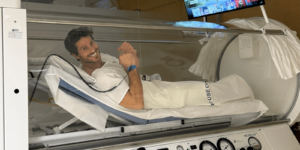
Hyperbaric chamber
A hyperbaric chamber is a device that aims to increase the body’s oxygen supply. Its benefits include accelerated healing, reduced inflammation, and improved treatment of serious infections.

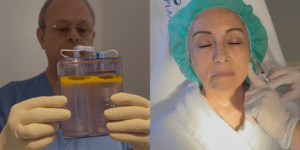
Plasmapheresis
An advanced medical procedure that filters and purifies blood plasma, the liquid part of the blood where toxins, metabolic waste, and inflammatory molecules circulate.

Facial rejuvenation with bioregenerative cells
The bioregenerative facial rejuvenation process obtains fat tissue to process and use it for regenerative purposes.
ARTÍCULOS RELACIONADOS
-

A strong immune system is essential for maintaining good health and preventing disease, but it…
-
Regenerative medicine aims to slow down aging, both in terms of health and quality of…
-
We are starting a series of conversations between Dr. Jorge Planas, plastic surgeon and medical…