Localised fat is an accumulation of adipose tissue concentrated in certain areas of the body that can be difficult to reduce through a balanced diet and physical exercise alone.
- The abdomen
- The flanks
- The hips
- The inner thighs
are some of the areas where these deposits can be particularly persistent.
Having localised fat does not necessarily mean being overweight. A person may be at a stable weight and still have small, resistant fat deposits in certain areas due to factors such as:
- Genetics
- Body fat distribution
- Age
- Hormonal changes
- Lifestyle
Today, there are different body aesthetic medicine treatments that can address these accumulations without the need for surgery.
These include techniques such as:
- Cryolipolysis
- LPG
- Muscle training using HUBER
Each procedure works differently and addresses different objectives: reducing specific fat deposits, reshaping the body contour, treating cellulite or improving muscle tone.
For this reason, there is no single treatment for eliminating or reducing localised fat without surgery that is suitable for every patient. The choice should be based on an individual assessment that takes into account the area to be treated, the volume and distribution of adipose tissue, skin quality and each person’s goals.
At Clínica Planas, non-invasive body treatments are recommended following an individual assessment and, when indicated, can be combined with one another and accompanied by an appropriate diet and physical activity to address body contour from a comprehensive perspective.

What is non-surgical localised fat reduction and how does it work?
Non-surgical localised fat reduction encompasses different body aesthetic medicine procedures designed to treat specific deposits of adipose tissue without surgery.
Unlike liposuction, these treatments do not require incisions or surgical removal of fat. Depending on the technology used, they can act on adipose tissue, help reshape the body contour or complement treatment through mechanical stimulation and muscle training.
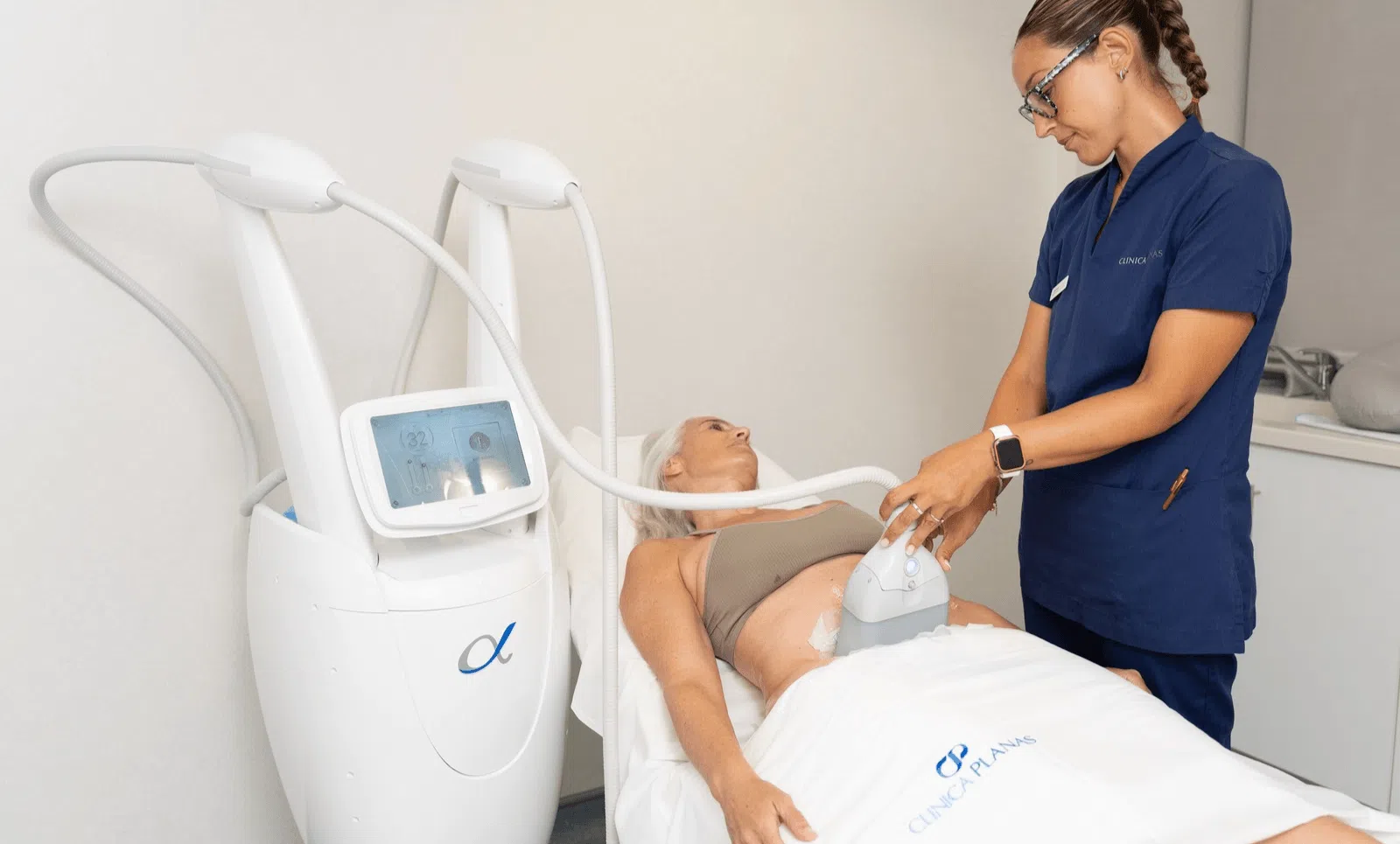
One of the techniques used to treat localised fat deposits is cryolipolysis, a non-invasive procedure based on the controlled application of cold to adipose tissue.
During the session, the tissue in the selected area is exposed to low temperatures in a controlled manner. Adipocytes — the cells specialised in storing fat — are particularly sensitive to cold, so this process can trigger their gradual elimination. Subsequently, the body processes and eliminates the affected cells over the following weeks.
Cryolipolysis is performed locally and may be particularly suitable for treating certain accumulations of fat in areas such as:
- Abdomen.
- Flanks.
- Inner thighs.
- Hips.
- Other small accumulations of localised fat suitable for treatment.
A session lasts approximately 45 minutes, although the duration may vary depending on the area and the recommended protocol.
Changes are not immediate. The body needs time to gradually process the affected adipocytes, so results develop over the following weeks. The first changes can usually begin to be seen approximately one month after treatment and continue to develop thereafter.
Cryolipolysis can also form part of a combined protocol. Depending on the patient’s characteristics, it can be complemented with treatments such as LPG, physical exercise and an appropriate nutritional approach to address body contour more comprehensively.
Main differences compared with traditional liposuction
Cryolipolysis and liposuction may share a common goal — targeting localised fat deposits and improving body contour — but they are different procedures in terms of both how they work and what they can achieve.
Cryolipolysis is a non-surgical treatment, whereas liposuction is a plastic surgery procedure designed to remove adipose tissue using cannulas. They should therefore not be considered equivalent procedures or interchangeable alternatives for every patient.
As a non-invasive procedure, cryolipolysis:
- Does not require hospital admission.
- Does not require anaesthesia.
- Does not involve incisions.
- Does not require post-surgical care.
- Is performed on an outpatient basis.
- Usually allows patients to resume their everyday activities after the session.
- Does not require the use of a postoperative compression garment.
- Can be considered at different times of the year, following the specialist’s recommendations.
After a session, temporary effects may occur in the treated area, such as redness, sensitivity, numbness or temporary changes in skin sensation. Their intensity and duration may vary from person to person.
In many cases, patients can continue with their usual activities after treatment and subsequently resume exercise in accordance with the professional’s recommendations.
However, it is important to understand that the results of a non-invasive treatment are not equivalent to those of liposuction.
Liposuction allows a greater amount of adipose tissue to be surgically removed during a procedure and may be indicated when more extensive body contouring is desired. Cryolipolysis, on the other hand, is primarily intended for the gradual treatment of more localised fat deposits.
Furthermore, depending on the amount of fat, the area being treated and each patient’s goals, several cryolipolysis sessions may be necessary. The choice of one technique or another should always be made after assessing each case individually.
The best non-invasive treatments for eliminating localised fat
Not all localised fat deposits or body contours have the same characteristics. For this reason, before choosing a treatment, it is important to identify which component needs to be addressed:
- A specific deposit of adipose tissue
- A larger body area
- The presence of cellulite
- Tissue quality
- Lack of muscle tone
An initial assessment makes it possible to determine which procedure may be most suitable and whether different techniques should be combined as part of a personalised protocol.
Cryolipolysis
Cryolipolysis is a non-invasive body treatment that uses controlled cooling to target adipose tissue locally.
For approximately 45 minutes, applicators are placed over the selected area and cool the tissue in a controlled manner. The aim is to selectively affect some of the adipocytes in the treated area so that the body can subsequently process and gradually eliminate them over the following weeks.
For this reason, cryolipolysis is particularly suitable for people with well-defined fat deposits that persist despite maintaining healthy habits.
It may be considered, for example, for certain localised accumulations on the abdomen, flanks, inner thighs, hips and other areas of the body suitable for treatment.
Its main characteristics include:
- It does not require surgery or anaesthesia.
- It is performed on an outpatient basis.
- It does not involve incisions.
- It generally does not require a post-surgical recovery period.
- It usually allows patients to continue with their everyday activities after the session.
- It acts locally on the selected area.
Results are progressive and begin to become visible during the weeks following treatment. The result will depend, among other factors, on the initial volume of fat, the anatomy of the area, the individual’s response and the established goals.
For some patients, two or three sessions may be considered to achieve a greater reduction in contour. The number of sessions should be determined individually after assessing the progress of the treatment.
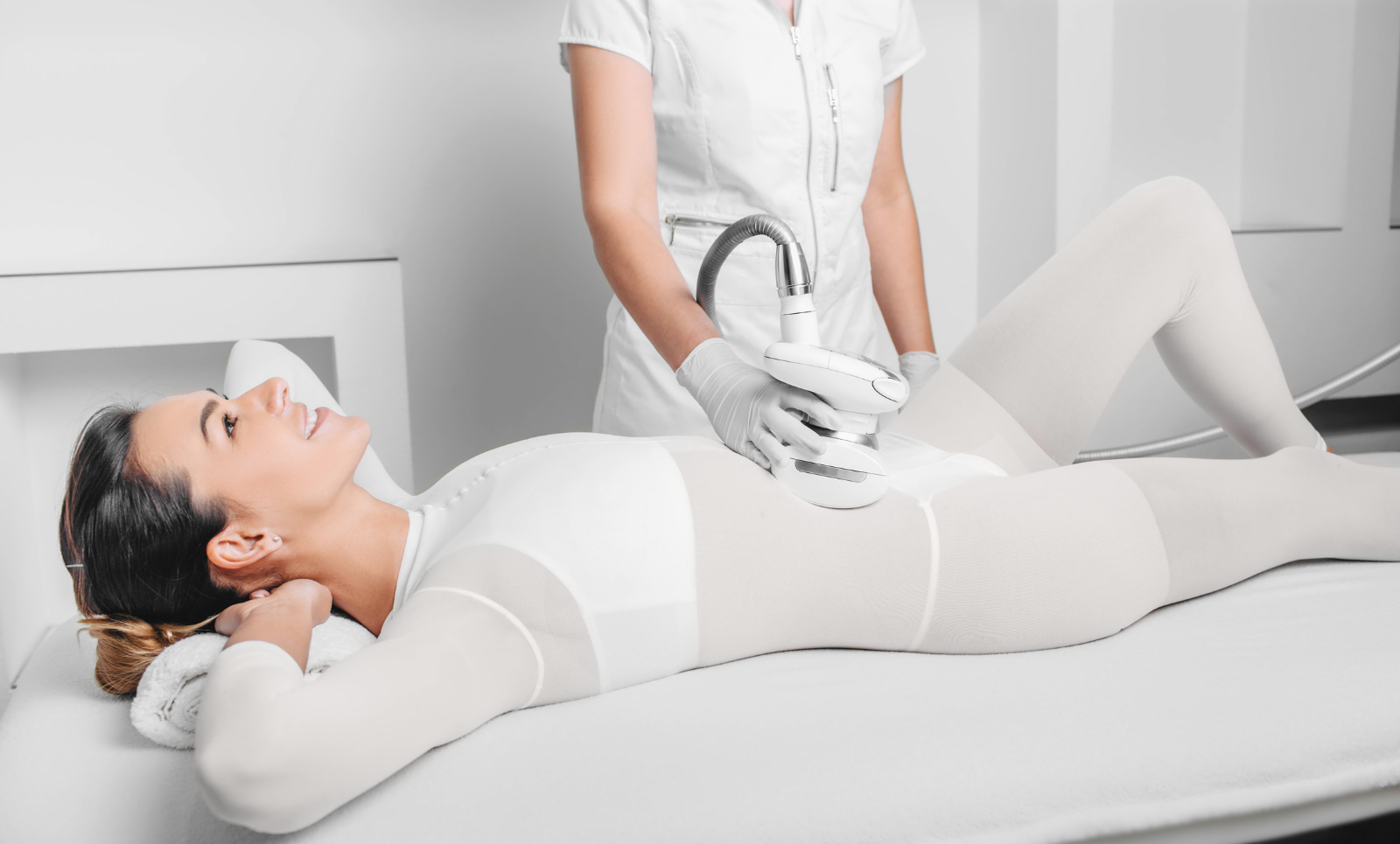
LPG
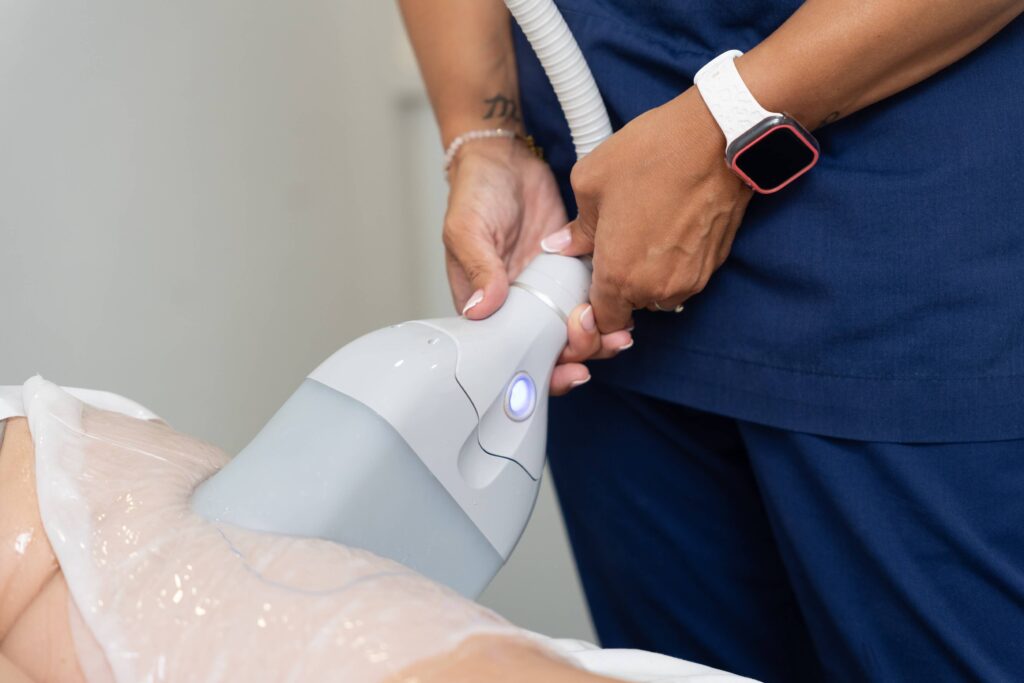
LPG is a non-invasive mechanical tissue stimulation technique that works on the subcutaneous tissue and can contribute to reshaping the body contour.
Its mechanism and objectives differ from those of cryolipolysis. While cryolipolysis primarily targets specific deposits of adipose tissue through controlled cooling, LPG can be used to treat larger areas of the body through mechanical stimulation.
For this reason, it can be used on larger areas, such as the contour of the legs from the hips to the knees, depending on the initial assessment.
It can also be incorporated as a complementary treatment within protocols that include cryolipolysis. In these cases, mechanical stimulation allows the tissue in the treated area to be addressed as part of a comprehensive body-contouring approach.
In addition, LPG can be used when one of the goals is to improve the appearance of cellulite, an alteration in the structure of subcutaneous tissue that can cause visible irregularities on the surface of the skin.
Sessions last approximately 30 minutes, and the protocol is adapted to each patient’s needs. Several sessions may usually be recommended, with the frequency determined by the professional responsible for the treatment.
Unlike procedures specifically designed to reduce adipocytes, LPG should primarily be understood as a tool for tissue stimulation and body contouring.
HUBER
When the goal of body treatment is not limited to adipose tissue and muscle tone also needs to be addressed, LPG can be combined with HUBER.
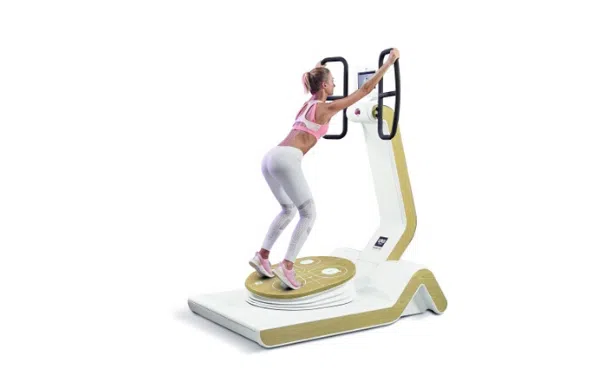
HUBER is a training platform that simultaneously activates different muscle groups through exercises performed under professional supervision.
Sessions last approximately 20 minutes and are structured around short exercises. The aim is to work on muscle activation, stability and toning without the need for heavy weights or high-impact exercises.
HUBER does not act on localised fat in the same way as cryolipolysis. Its role within a body treatment protocol is different: it allows muscle training to be incorporated as a complement to other techniques designed to reshape the body contour.
Combining LPG and HUBER makes it possible to work on different components consecutively. First, LPG acts on the tissue through mechanical stimulation; subsequently, the exercises and muscle contractions performed with HUBER allow specific muscle training to be incorporated.
In this way, the body treatment approach focuses not only on reducing volume but also on reshaping the contour and improving muscle tone.
Who is the ideal candidate for these procedures?
Non-surgical localised fat reduction treatments may be suitable for both women and men who have fat deposits in certain areas and wish to improve their body contour without initially undergoing surgery.
In general terms, these procedures are intended to treat localised fat, not overweight or obesity. Nor are they a substitute for a balanced diet or physical exercise.
Each candidate should be assessed individually, as the most suitable technique will depend on factors such as the amount and distribution of fat, the anatomical area, tissue quality, the presence of cellulite, muscle tone and expectations regarding the outcome.
- When there are very specific deposits — for example, on the abdomen, flanks, inner thighs or certain areas of the hips — cryolipolysis may be considered.
- When the goal is to treat a larger body area, reshape the contour or also address the appearance of cellulite, LPG may be considered.
- HUBER can be incorporated when, in addition to working on body contour, a specific component of muscle activation and toning through supervised exercise is desired.
It is also important to determine when a non-invasive procedure may not be sufficient. If there is a greater volume of fat or a more significant change in body contour is desired, the specialist may consider other alternatives, including surgery.
For this reason, there is no single localised fat treatment that is suitable for everyone. An initial assessment makes it possible to identify which component needs to be treated and establish which technique or combination of techniques is best suited to each patient’s characteristics and goals.
Are the results permanent?
The duration of the results depends both on the treatment performed and on the patient’s subsequent progress.
In the case of cryolipolysis, some of the adipocytes affected by controlled cooling are gradually eliminated from the treated area. However, this does not mean that the area is protected against future changes in volume.
The adipocytes that remain in the tissue can increase in size if weight is subsequently gained. In addition, the body may experience changes in fat distribution over time due to age, hormonal changes or lifestyle changes.
For this reason, maintaining a stable weight, following a balanced diet and exercising regularly are important factors in helping to maintain the results over the long term.
LPG works differently, as its mechanism is not based on destroying adipocytes. Its effects are related to mechanical tissue stimulation and body contouring, as well as its use in protocols designed to improve the appearance of cellulite.
In these cases, maintenance sessions may be recommended depending on each patient’s progress and goals.
HUBER, meanwhile, is linked to muscle training. As with any exercise programme, changes related to muscle tone and condition depend on maintaining regular physical activity.
Ultimately, reducing localised fat without surgery is possible in appropriately selected patients, but it is essential to understand what each procedure can offer and its limitations. Cryolipolysis, LPG and HUBER work through different mechanisms and can be used independently or in combination depending on the diagnosis.
An individual assessment makes it possible to determine whether the main goal is to reduce a localised fat deposit, reshape a larger area of the body, improve the appearance of cellulite, work on muscle tone or combine several of these objectives within the same protocol.
At Clínica Planas, treatment is established after assessing the patient’s characteristics and defining a personalised plan, taking into account both the most appropriate procedure and the habits needed to help maintain the results.

Frequently asked questions about non-surgical localised fat reduction
Can localised fat be eliminated without surgery?
There are non-surgical treatments that can target certain deposits of localised fat. One option is cryolipolysis, which uses controlled cooling to target adipocytes in a specific area. The indication and outcome depend on the amount and distribution of fat and the individual characteristics of each patient.
These treatments are primarily intended to improve localised deposits and body contour. They are not weight-loss treatments and do not replace a balanced diet and regular physical exercise.
How can abdominal fat be reduced without surgery?
When there is a localised fat deposit in the abdomen, cryolipolysis may be considered as a non-surgical option. If other aspects of body contour also need to be addressed, the specialist may consider combining it with techniques such as LPG and physical exercise.
It is important to distinguish between subcutaneous abdominal fat that may be suitable for certain aesthetic treatments and other types of fat, such as visceral fat. An initial assessment makes it possible to determine the type of fat accumulation present and which approach may be indicated.
What is the difference between cryolipolysis and liposuction?
The main difference is that cryolipolysis is a non-invasive procedure that uses controlled cooling to target localised fat deposits, whereas liposuction is a surgical procedure that removes adipose tissue using cannulas.
Cryolipolysis does not require incisions or anaesthesia, and its effects develop gradually. Liposuction can address larger volumes of adipose tissue and produce a more significant change in body contour. The choice depends on the patient’s anatomy, the volume of fat and their individual goals.
How many cryolipolysis sessions are needed?
The number of sessions depends on the area to be treated, the amount of adipose tissue, the individual’s response and the established goal. For some patients, one session may be sufficient, while for others, two or three sessions may be recommended.
For this reason, the number of sessions should not be determined generally before an individual assessment has been carried out.
When do cryolipolysis results start to become visible?
Cryolipolysis results are progressive. The body needs several weeks to process the adipocytes affected by the cold, so the first changes may begin to become visible approximately one month after treatment and continue to develop thereafter.
The speed and extent of the response may vary between patients.
Does cryolipolysis remove fat permanently?
The adipocytes affected and subsequently eliminated by the body are no longer part of the treated tissue. However, the adipocytes that remain in the area can increase in size if weight is gained.
For this reason, maintaining a stable weight, following a balanced diet and engaging in regular physical activity are important for helping to maintain the results.
Can cryolipolysis help you lose weight?
No. Cryolipolysis is primarily intended to treat localised fat deposits and improve body contour, not to achieve overall weight loss.
For this reason, a person may be a candidate for cryolipolysis even if they have a stable weight, provided they have a localised accumulation of fat suitable for treatment. In cases of overweight or obesity, other approaches should be considered.
Which treatment is better for localised fat: cryolipolysis or LPG?
Cryolipolysis and LPG do not have the same mechanism of action and do not pursue exactly the same objective. Cryolipolysis uses controlled cooling to target adipocytes in localised deposits, whereas LPG uses mechanical stimulation to work on the tissues and reshape the body contour.
Therefore, the choice does not necessarily involve determining which is “better”. Depending on the diagnosis and the objective, they may be recommended independently or form part of a combined protocol.
Can cryolipolysis, LPG and HUBER be combined?
Yes. When considered appropriate following a professional assessment, different techniques can be integrated into a personalised body treatment protocol.
Cryolipolysis can target localised fat deposits; LPG can provide mechanical tissue stimulation and body contouring; and HUBER can incorporate muscle activation and training. As they work through different mechanisms, combining them makes it possible to address different aspects of body contour.
What is the best treatment for eliminating localised fat without surgery?
There is no single treatment that is the most suitable for every patient. The choice depends on where the fat is located, its volume, the characteristics of the tissue, the presence of cellulite, muscle tone and the desired outcome.
For this reason, the first step is to undergo an individual assessment to determine whether cryolipolysis, LPG, HUBER, a combination of techniques or, depending on the characteristics of the case, another type of treatment is the most appropriate option.
RECOMMENDED TREATMENTS

Cryolipolysis
A non-invasive body treatment for reducing fat and cellulite, without needles or injections and with immediate recovery.
HUBER 360 Platform
Smart technology designed to shape and tone the silhouette naturally, quickly and effectively.
LPG
Discover the benefits of LPG and all the treatments available at Clínica Planas that use this non-invasive technology.
