Symptoms of vulvar lichen sclerosus
The main symptom of lichen sclerosus is itching in the vulva.
Although not all women who suffer from this condition experience itching, nor are all women diagnosed when they do experience this discomfort.
The problem with lichen sclerosus is that it is greatly underdiagnosed and undertreated. Itching is often given little importance; it is a symptom that is trivialised because in most cases it is treated as if it were a fungal infection, and sometimes women with vulvar lichen sclerosus take so long to be diagnosed that they even lose the anatomy of the vulva.
It is important to observe the vulva because it does not always itch, and many women seek medical advice when they have already lost their anatomy. This is why it is important to diagnose this disease early. Furthermore, if the itching persists over time, is chronic and does not go away with fungal treatments, you probably have vulvar lichen sclerosus.
Book an
appointment
CLÍNICA PLANAS' DATA PROTECTION INFORMATION CLICK HERE
Purposes: To respond to your requests and to send you commercial information about our products and services, including via electronic means. Rights: At any time, you can withdraw your consent, access, rectify, delete your data and exercise other rights at doctor@clinicaplanas.com. Additional Information: Privacy Policy.

Our Patients’
Reviews
 Raquel Pacheco
12/08/2026
Raquel Pacheco
12/08/2026

 Robbie Berman
11/08/2026
Robbie Berman
11/08/2026
 M.Claustre Besora Canal
02/07/2026
M.Claustre Besora Canal
02/07/2026
 Cristina López sole
09/06/2026
Cristina López sole
09/06/2026
Vulvar lichen sclerosus treatment
Lichen sclerosus vulva is an inflammatory disease of the vulvar skin that causes
Atrophy
Sclerosis
In other words, the skin becomes stiff and loses its anatomy, and the classic treatment that has been used until now is local corticosteroids.
If treated in time, vulvar lichen sclerosus can be stopped or slowed down. However, as an autoimmune and chronic disease, there is no permanent cure and it will appear in outbreaks, for example, in response to stressful situations.
As mentioned above, the classic treatment is corticosteroid cream in long, decreasing doses, but in recent years, regenerative medicine treatments have begun to be used:
Infiltration of different substances into the skin of the vulva
Laser
Radiofrequency
Treatments with adipose tissue stem cells.
Regenerative medicine treatments tend to have very good results in women with vulvar lichen sclerosus who are resistant to corticosteroids, although increasingly, these innovative procedures are being used before the woman has tried the classic treatment.

Vulvar lichen sclerosus
Vulvar lichen sclerosus is an autoimmune skin disease of the vulva that can occur at any age.
It causes chronic inflammation that leads to increasing atrophy and loss of elasticity in the skin of the inner labia, the clitoral hood, the inner part of the labia majora, and the perineum, eventually causing the anatomy of the vulva to disappear.
The main symptom is itching, which can be very uncomfortable. There are three main objectives in the treatment of vulvar lichen sclerosus:
1. Eliminating the symptoms, since the itching can become unbearable.
2. Sexual intercourse without pain.
3. Preventing vulva anatomy loss, since the lichen eats away at the labia, thus eroding the structures of the vulva. This can be achieved through early diagnosis, good monitoring and regenerative treatments.
F.A.Q.
-
What is lichen?
Lichen is an autoimmune disease that affects the skin of the vulva and causes inflammation that lasts throughout life. Above all, it causes intense itching and causes the structures of the vulva to lose elasticity, as if it were atrophy. In addition to itching, it can also cause pain during sexual intercourse and loss of vulvar anatomy.
-
What causes vulvar lichen?
It is an autoimmune disease with no known cause. There is a familial association, meaning that if the mother has it, the daughter may also have it, but it has not been possible to determine exactly what factors trigger vulvar lichen.
-
How is vulvar lichen treated?
The treatment of vulvar lichen sclerosus depends on the stage at which it is diagnosed. Initially, the classic method is the application of corticosteroid creams, but fortunately, today there are regenerative medicine alternatives such as injections, laser treatment, or fat stem cells.
-
Which specialists treat this condition?
The sad reality of vulvar lichen is that it falls into a grey area between gynaecologists and dermatologists, so it is treated by the specialist who specialises in this disease. The ideal treatment would be a multidisciplinary unit composed of dermatologists, gynaecologists, and doctors who are experts in regenerative therapy. You should check every six months, take photographs so that you always know the anatomy of the vulva in case of loss, and be alert to any outbreaks so that they can be stopped in time.
In general, women who have lichen sclerosus, if treated properly, can lead a completely normal life.
Expert opinion
Dra. Laura Cortés

Lichen is a skin condition of the vulva that affects women of all ages. The main symptom is itching, which is why it is often confused with fungal infections or other conditions. When diagnosed early, treatments can be administered to slow its progression, but the problem is that in most cases, by the time it is diagnosed, it is already very advanced. Fortunately, we have regenerative medicine techniques such as laser treatment, growth factor infiltration and bio-regenerative cell infiltration, which can help reverse the changes caused by the disease. The most important thing is early diagnosis and strict monitoring.
Related treatments
-
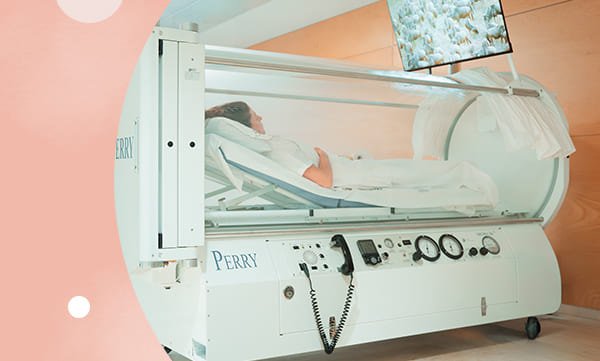
Hyperbaric Chamber and Oxygen Therapy
The hyperbaric chamber uses high-pressure oxygen to treat wounds, infections, and oedema. Discover its benefits and main therapeutic applications. -

Regenerative Medicine Unit
-

Bio-cellular facial regeneration
The bio-regenerative facial rejuvenation process obtains fatty tissue to process it and use it for regenerative purposes.
Related
articles
-

Recomendaciones de alimentación para la menopausia
Una correcta alimentación durante la menopausia puede ayudar a la paciente paliar sus síntomas y tener mayor salud. -

Manchas blancas en los genitales
Las manchas blancas en tus genitales pueden ser indicio de que algo no va bien en nuestro cuerpo. Te contamos las posibles causas. -

Envejecimiento de los genitales femeninos
Te contamos las causas que provocan este envejecimiento, te damos algunos consejos para reducir los efectos de la edad