Introduction
Hair loss is a widespread concern for men and women, often bringing an emotional weight that affects both inner confidence and outward self-image.
Advancements in hair science now provide safe and sophisticated methods for addressing hair loss, particularly through the targeted use of hair growth factors to support natural vitality.
Book an
appointment
CLÍNICA PLANAS' DATA PROTECTION INFORMATION CLICK HERE
Purposes: To respond to your requests and to send you commercial information about our products and services, including via electronic means. Rights: At any time, you can withdraw your consent, access, rectify, delete your data and exercise other rights at doctor@clinicaplanas.com. Additional Information: Privacy Policy.

Our Patients’
Reviews
 Raquel Pacheco
12/08/2026
Raquel Pacheco
12/08/2026

 Robbie Berman
11/08/2026
Robbie Berman
11/08/2026
 M.Claustre Besora Canal
02/07/2026
M.Claustre Besora Canal
02/07/2026
 Cristina López sole
09/06/2026
Cristina López sole
09/06/2026
Understanding the growth factor treatment
As an advanced approach to hair health, hair growth factor treatment offers a natural and effective way to stop hair loss while encouraging new growth. The procedure centres on essential repair proteins extracted from the patient’s own blood.
The process begins with the extraction of a small blood sample, which is then centrifuged. Centrifugation facilitates the isolation of specific haematological components, enabling the concentration of plasma containing high titres of platelets and growth factors. Once these factors have been obtained, they are applied to the scalp via virtually painless microinjections.
Growth factors have the ability to activate and regulate cell division and stimulate various biological processes, improving blood flow to the scalp, stimulating new hair growth and strengthening existing follicles. This results in increased hair density and quality, improved hair condition and a significant reduction in hair loss.
This treatment is minimally invasive and safe, and as it is based on a component extracted from the patient themselves, it considerably reduces the risk of allergies or side effects. It can also be combined with other hair treatments to enhance results. Building lasting scalp health is a gradual process; therefore, a sequence of treatments is suggested to reinforce the growth cycle and sustain improvements over time.
The fundamentals of hair growth factors
As a specific haematological fraction, hair growth factors contain a dense concentration of the essential components needed to stimulate cells and help the body repair and regrow tissue. These components also release bioactive proteins that stimulate tissue regeneration and promote cellular repair processes.
Scalp application delivers a comprehensive health boost, arresting hair loss and stimulating natural growth for superior hair quality and density.
When is treatment with hair growth factors effective?
Hair treatment with hair growth factors has proven to be particularly effective in the early stages of hair loss, and its effectiveness depends largely on the diagnosis and the cause of the alopecia. This procedure is particularly beneficial in the following cases:
- Early-stage androgenetic alopecia, in both men and women, as it helps to slow down hair follicle miniaturisation and stimulate the growth of thicker, healthier hair.
- Hair loss caused by factors such as prolonged stress, hormonal imbalances (such as postpartum or the menopause) or seasonal causes.
It is essential to undergo an individual medical assessment before starting treatment, as not all types of alopecia respond in the same way to this treatment. A proper diagnosis will help determine whether this procedure is the most suitable option and establish a personalised plan to maximise its effectiveness.
Benefits of this treatment
Treatment with hair growth factors offers multiple benefits, both for preventing and treating hair loss. The specific composition facilitates the physiological stimulation of regenerative scalp pathways while enhancing the structural resilience of hair follicles.
Stimulation of bio-regenerative cells for improved hair quality
The procedure facilitates the stimulation of follicular cells and the revitalisation of weakened roots, resulting in the growth of more robust and resilient hair. This stimulation helps to prolong the growth phase of the hair cycle, significantly improving hair density and structure
Hair regeneration
By promoting tissue repair and cell regeneration, it significantly improves scalp health. The restorative properties of this therapy facilitate the improvement of areas impacted by alopecia, halting further loss and encouraging the activation of new follicles.
Improvement in overall hair health
The treatment increases scalp microcirculation, ensuring a superior supply of oxygen and vital nutrients to the hair follicles.
It also helps to reduce inflammation and stress, factors that are often implicated in various types of alopecia. The resulting hair is healthier, shinier, and more resilient to external damage.
Related treatments
-
Hair micro-grafts
Hair surgery consists of implanting follicular units in the hair loss area, resulting in new, natural and definitive hair. -

Hair Injections
It consists of injecting drugs directly into the scalp via micro-injections with local anaesthetic. -
Beard Transplant
With a beard transplant, you’ll achieve a thick, well-defined beard. Get natural-looking results with the most advanced techniques at Clínica Planas.
Related
articles
-

What is blood plasma?
What exactly is plasma, what functions does it serve, and how can it be safely cleaned of toxins? -
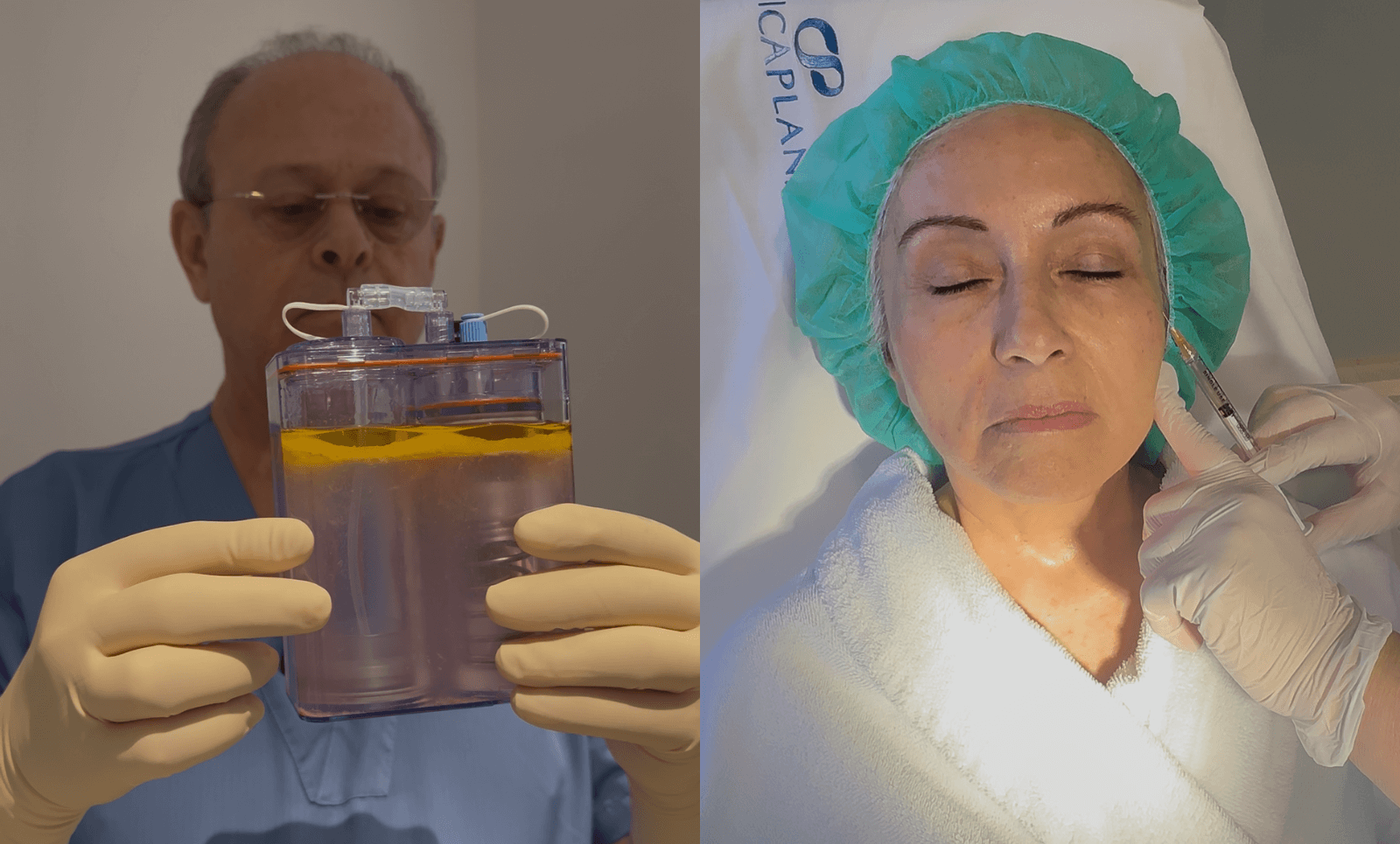
What is Regenerative Medicine?
We are starting a series of conversations between Dr. Jorge Planas, plastic surgeon and medical director of Clínica Planas, and Dr. Miguel Garber, expert in regenerative medicine. -

Regenerative Medicine from the Root: How to Prepare My Longevity Plan
In this post we discuss the concept of the longevity plan: What is it? What benefits can it bring to my health?
F.A.Q.
-
How many sessions are needed?
Because every person's hair is unique, the number of sessions needed to see a real difference will depend on the individual needs of the patient. However, the following plan is usually followed:
- Initial phase (intensive treatment): A therapeutic regimen consisting of 2 to 3 sessions, administered at intervals of 3 to 4 months, is indicated to ensure optimal follicular induction and the initiation of regenerative pathways.
- Maintenance: Once the desired results have been achieved, it is advisable to undergo 1 or 2 sessions per year to maintain the benefits gained and prevent a new phase of hair loss.
During the initial consultation, the medical specialist will assess the condition of the scalp, the patient’s medical history and the type of alopecia, thereby drawing up a personalised treatment plan tailored to their specific needs. This individualised approach allows for optimised results and ensures a controlled and effective progression of the treatment. -
What is the difference between hair mesotherapy and hair growth factors?
While growth factors and scalp mesotherapy represent minimally invasive hair restoration modalities, distinct compositional differences exist between these two treatments.
- Hair growth factors: This treatment uses the patient’s own plasma, extracted from a small blood sample which is centrifuged to concentrate the growth factors. These factors work on follicle cells to stimulate regeneration, improve blood flow, and encourage new hair. Using the patient’s own plasma ensures the risk of allergic reactions or side effects is virtually zero.
- Hair mesotherapy: The technique consists of scalp micro-injections formulated with specific vitamin complexes. These active ingredients nourish hair follicles to slow loss and encourage new growth.
-
How long do the effects last?
The duration of the effects of treatment with hair growth factors can vary depending on various individual factors, such as the type and severity of alopecia, the patient’s age, the condition of the scalp and other individual factors. The benefits of the treatment generally remain visible for between 6 months and 1 year after the first phase is finished. To prolong the benefits and prevent a new phase of hair loss, it is recommended that maintenance sessions be carried out every 6 to 12 months, as determined by the specialist based on the patient’s progress. These booster sessions help to maintain hair density, keep the hair follicles stimulated and preserve hair quality over time.
-
How often should the treatment be carried out?
The timing of growth factor sessions changes depending on the original state of the hair, the specific form of alopecia, and how the patient reacts, within a set of general guidelines.
- Initial phase (intensive treatment): The recommended treatment plan consists of 2 to 3 sessions, with an interval of 3 to 4 months between each, to facilitate follicular activation and the cessation of hair loss.
- Maintenance phase: Sustaining clinical outcomes requires 1 or 2 annual sessions, contingent upon individual baseline variables and longitudinal follicular evolution.
At each consultation, the medical specialist will assess the condition of the scalp and the progress of the treatment, adjusting the frequency of sessions as necessary.
Expert opinion
Dr. Jorge Luis Zegarra

Dr. Iván Torres

Member of the medical team at Clínica Planas.