
Losing weight can help us improve our health and physical fitness. However, this process can also bring unexpected changes, such as increased skin laxity or areas of sagging skin.
To help maintain body firmness, it is important to combine weight loss with:
- muscle-strengthening exercises
- a suitable diet
- and proper hydration.
The goal should go beyond the number on the scales: what matters is losing fat while preserving muscle mass and maintaining skin quality.
In this article, we explain which habits are worth adopting and which treatments may be considered if skin laxity has already developed.
Lose Weight Gradually and Avoid Rushing the Process
When we want to lose weight, it is common to look for quick results. However, gradual weight loss gives the tissues more time to adapt to changes in body volume.
Furthermore, the number on the scales does not tell us everything about how our body is changing. During weight loss, it is important to pay attention to muscle mass, protein intake and physical activity, with professional guidance to ensure the process is adapted to each individual.
Consistency is essential. Planning your week and setting aside time for exercise helps establish habits that can be maintained over time. Achieving better physical fitness requires ongoing commitment, even after reaching your desired weight.

Prioritise Strength Training Rather Than Cardio Alone
If you want to maintain body firmness while losing weight, strength training should play a central role in your exercise routine. This type of exercise helps improve muscle tone and contributes to maintaining an active metabolism.
Cardiovascular exercise can form part of the programme, but relying exclusively on cardio means missing out on the targeted exercises needed to develop muscle.
One way to combine both activities is to complete your strength-training session first, followed by 15 to 20 minutes of moderate-intensity cardio, always adapting the routine to your physical condition. The intensity should allow you to breathe and hold a conversation while still feeling some exertion.
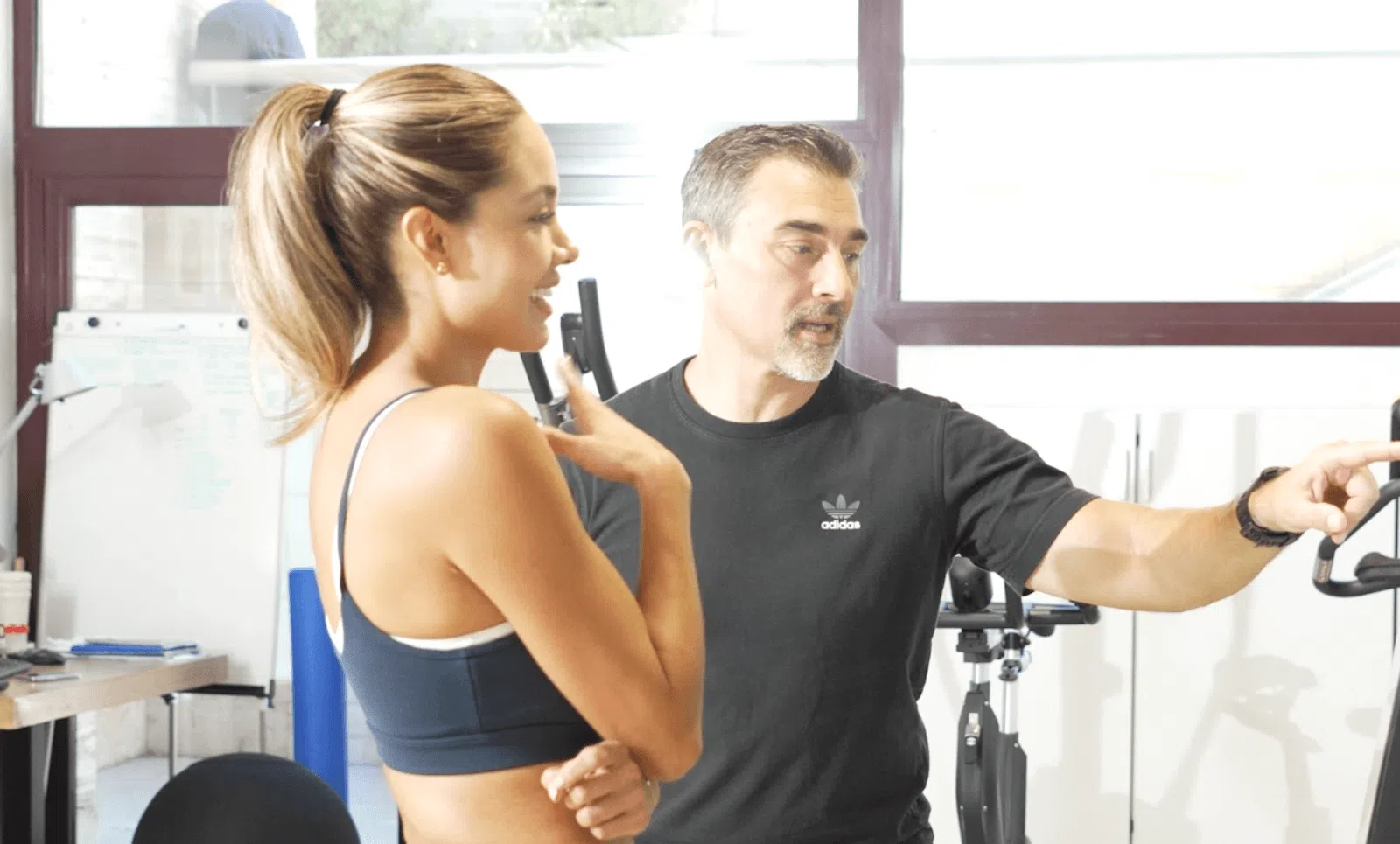
The Medical Gym at Clínica Planas offers individualised training programmes supervised by a multidisciplinary team, which may include:
- Personal trainers
- Doctors
- Nutritionists
- Physiotherapists
Following an initial assessment, the team adapts the exercises to each patient’s goals, physical limitations and lifestyle.
Ensure an Optimal Daily Protein Intake
Protein is essential for developing muscle mass. Therefore, when our goal is to lose fat while maintaining muscle tone, strength training should be accompanied by an adequate protein intake.
Nutritional requirements vary from person to person. As a general guideline, between 1.2 and 1.8 grams of protein per kilogram of body weight per day may be recommended in the context of strength training. However, this is not a universal recommendation: a nutrition professional should determine the appropriate amount for each individual.
Foods that provide protein include:
- chicken
- eggs
- fish
- legumes
- tofu.
The diet should maintain a balance between proteins, carbohydrates and fats, with quantities adapted to each person’s goals and nutritional needs.
Maintain Proper Hydration Inside and Out
Hydration is also an important part of maintaining healthy skin and muscles. Our cells need water to function properly, making hydration particularly important throughout the weight-loss process.
During strength training, it is advisable to drink water even if your thirst levels or perceived exertion differ from those experienced during a cardio session. Taking small sips during exercise and replenishing fluids afterwards helps make hydration part of your workout routine.
Externally, keeping the skin moisturised helps support its elasticity. Using suitable moisturising creams can form part of your daily skincare routine, following a specialist’s recommendations according to your skin’s needs.
These measures complement exercise and nutrition, but when there is significant excess skin, specific treatments may need to be considered.
Support Your Diet with Supplements That Promote Skin Elasticity
Collagen is one of the proteins associated with skin firmness, and it is frequently mentioned when discussing supplements and skin elasticity.
Before introducing any supplement, it is important to review the foundations of your plan:
- a balanced diet
- sufficient protein intake
- and a consistent exercise routine.
Supplementation should be assessed individually, with professional guidance and as part of an overall care plan.
Therefore, if you are considering taking collagen supplements or products intended to improve skin elasticity, consult the team supervising your nutrition first. It is important to establish what you need and what purpose the supplement would serve in your particular case.
How to Restore Skin Firmness Once Sagging Has Appeared
When skin laxity is already visible, the first step is to determine its severity and assess how much excess skin is present. Mild loss of firmness requires a different approach from significant skin sagging.
At Clínica Planas, treatment selection is personalised, taking into account the areas to be treated and the characteristics of the tissues.
HIFU
Following significant weight loss, the skin and its supporting tissues may lose firmness, while gravity causes the entire structure to descend. HIFU (High-Intensity Focused Ultrasound) is one of the technologies used to help counteract this effect. At Clínica Planas, we use the new Ultraformer MPT device.
Its main advantage is the depth at which it works. HIFU does not act solely on the surface: it reaches the SMAS, the deep layer that supports the skin. The aim is to improve the quality of the deeper tissues and provide greater support for the entire skin structure, helping to minimise sagging and maintain the tissues in their natural position as effectively as possible.
This makes it particularly interesting for people who have lost a significant amount of weight and want to prevent or minimise the associated skin laxity.
Morpheus8 for Mild Skin Laxity
Morpheus8 combines fractional radiofrequency and microneedling to stimulate collagen and elastin production, improving skin firmness and quality.
It may be considered in cases of mild skin laxity and can be applied to areas such as the arms, abdomen or thighs. Its suitability depends on a specialist assessment, as it cannot address every degree of skin sagging.

Renuvion for Certain Cases of Moderate Skin Laxity
Renuvion is a surgical technique that uses radiofrequency and helium gas to promote skin contraction. It may be considered in certain cases of moderate skin laxity when the specialist determines that the tissues are likely to respond to this treatment.
The procedure is performed in an operating theatre and, depending on the size of the treatment area, may require local or general anaesthesia. Although initial changes may be noticeable after the procedure, improvement continues over the following months, with the final result assessed approximately six to nine months later.
Surgery to Remove Excess Skin in Cases of Severe Skin Laxity
When skin laxity is severe and there is a significant amount of excess skin, treatments designed to stimulate collagen production may not be sufficient. In these cases, surgery to remove the excess skin may be necessary.
Depending on the area affected, procedures such as the following may be considered:
- an arm lift
- a thigh lift
- abdominal surgery.
These procedures allow excess skin to be removed, but they leave scars, an important factor that must be explained and considered before deciding on treatment.
Maintain Skin Firmness with a Personalised Plan
Every body responds differently to weight loss. Maintaining a strength-training routine, following a balanced diet and paying attention to hydration are important steps throughout the process, although in some cases specific treatments may also be needed to address skin laxity.
At Clínica Planas, we support you with a personalised approach that combines physical exercise, nutrition and medical assessment. If you are concerned about maintaining skin firmness while losing weight or have already noticed areas of sagging skin, book a consultation to discover which care options and treatments may be suitable for you.
RECOMMENDED TREATMENTS

Personal Trainer
To help you develop healthy physical activity habits and achieve your goals, we offer a personalised training service.

Abdominoplasty
Abdominoplasty can restore a flatter abdomen by removing skin laxity and fat deposits while repairing the abdominal wall muscles.

Morpheus 8. Facial and Body Skin Laxity
A non-surgical procedure for reducing skin laxity and rejuvenating the face and body.
