
Why Do Dark Spots Appear on the Skin?
Skin pigmentation can have different causes:
1. Hormonal.
2. Genetic.
3. Inflammatory.
4. Vascular.
One of the most important factors is hormonal influence, particularly in the case of melasma, one of the most common pigmentation disorders. Genetic predisposition, especially through maternal inheritance, also plays a role in its development.
In addition to these factors, sun exposure without adequate protection can contribute to the appearance of dark spots and worsen existing pigmentation.
Melasma is particularly associated with hormonal changes. It occurs more frequently in women and can be triggered or aggravated by oral contraceptives, pregnancy, and hormone replacement therapy. Sun exposure without adequate sun protection can also activate and intensify this hyperpigmentation.
Therefore, skin pigmentation does not have a single cause. Identifying its origin is essential to choosing the most appropriate treatment.
What Are the Different Types of Skin Pigmentation?
Sun Spots (Solar Lentigines): Brown Spots Located in Areas Most Exposed to the Sun
Solar lentigines are pigmented spots associated with exposure to ultraviolet radiation. Their appearance is linked to insufficient sun protection. To prevent them, it is important to use topical sun protection, wear wide-brimmed hats, and avoid direct sun exposure between 12:00 PM and 4:00 PM, when sunlight is generally at its strongest.
Skin that is more vulnerable, sensitive, and reactive to solar radiation, particularly lighter skin phototypes (I and II), may have a greater predisposition to developing these spots.
There are also age spots, known as senile lentigines, which are pigmented lesions associated with ageing and commonly appear on the hands, arms, and face.
Melasma: Butterfly-Shaped Brown Patches Associated with Oestrogen Hormones and Worsened by Excessive Sun Exposure
Melasma has a primarily hormonal origin in approximately 90% of cases, which means its treatment should be approached as a long-term process and maintained throughout the year. Although autumn and winter are the most suitable seasons for intensive treatments, it is important to maintain a skincare routine during the rest of the year to control episodes of repigmentation, as hormonal factors are not seasonal.
In this context, DermaMelan is a treatment option that acts both on pigmentation accumulated on the skin’s surface and on the regulation of melanin production, the pigment responsible for skin colour. It is suitable for all skin phototypes and skin types, and its aim is to help control melanocyte activity and prevent the recurrence of dark spots.
Freckles: They Tend to Become More Noticeable in Summer
Freckles, also known as ephelides, are genetically determined areas of hyperpigmentation that commonly appear in people with lighter skin phototypes and particularly fair skin.
Their treatment also depends on each patient’s preferences. Some people prefer to keep their freckles while improving the overall appearance of their skin without removing them, while others wish to soften or reduce their visibility through specific treatments.
Post-Inflammatory Dark Spots: For Example, Marks Left by Acne
Skin pigmentation can also have an inflammatory origin. One example is the hyperpigmentation that appears following an inflammatory process, such as acne.
Stress can contribute to the appearance of dark spots by increasing inflammatory processes, particularly in people with a genetic predisposition.
In these cases, before considering laser treatment, it is important to control inflammation through treatments such as oral supplementation or chemical peels. This is because significant inflammation considerably increases the risk of developing post-inflammatory hyperpigmentation, meaning a dark spot that appears after a treatment.
Vascular Lesions: Redness, Couperose, and Small Angiomas
Although they are commonly grouped with visible skin imperfections, redness, couperose, and small angiomas are not technically pigmented spots but vascular lesions. This category includes cherry angiomas and spider veins.
They may appear due to genetic predisposition, capillary fragility, or ageing. Over time, blood vessel walls weaken, and these lesions may become more noticeable, particularly as the skin becomes thinner.
Why Are Autumn and Winter the Best Seasons for Treatment?
Although skin pigmentation can be treated throughout the year, autumn and winter offer particularly favourable conditions for certain dermatological and aesthetic procedures.
Firstly, sun exposure is generally lower during these months, which facilitates skin recovery after treatment and reduces the risk of hyperpigmentation and other side effects.
Additionally, this is a suitable time to undergo procedures that involve renewing the superficial layers of the skin, such as certain chemical peels.
At-home skincare also plays an important role. Dermocosmetic products allow patients to continue addressing pigmentation at home through depigmenting products and active ingredients such as retinol, which promotes skin renewal.
In summary, autumn and winter are excellent times to begin these types of treatments, particularly when introducing active ingredients such as retinol into a facial skincare routine for the first time.
Which Treatments Are Effective?
The treatment of skin pigmentation depends on several factors:
1. Its origin.
2. The degree of hyperpigmentation.
3. The condition of the skin.
Not all pigmented lesions require the same approach. While melasma needs a specific treatment, other types of pigmentation may respond better to intense pulsed light or different skin resurfacing procedures.
DermaMelan
For melasma, one of the treatments used is DermaMelan, a depigmenting mask designed to address this condition from different perspectives.
Its formulation combines active ingredients that act on inflammation, the vascular component, and skin renewal. It also contains retinol and helps regulate the activity of melanocytes, the cells responsible for producing melanin (the pigment that gives skin its colour).
The treatment begins with the application of the mask at the clinic. Afterwards, the patient goes home with the mask and keeps it on their face for four hours.
This is followed by a four-month at-home dermocosmetic treatment. These products contain depigmenting active ingredients that help maintain the effects of the treatment and progressively address pigmentation.
The aim is to continuously regulate melanocyte activity and help control melanin production.
Depending on the level of skin inflammation and the degree of hyperpigmentation, the specialist may consider incorporating other treatments, such as intense pulsed light (IPL).
Intense Pulsed Light (IPL)
Intense pulsed light is a technology that emits different wavelengths of light to treat various skin conditions, including both pigmentation and vascular concerns.
Its versatility allows it to address:
1. Dark spots.
2. Vascular lesions.
3. Overall skin quality.
It also helps improve skin tone uniformity, reduce pore size, and stimulate fibroblasts to promote collagen and elastin production.
At Clínica Planas, we use dual-filter intense pulsed light technology, which allows us to perform treatments with enhanced skin safety.
In addition to treating pigmentation irregularities, IPL offers benefits related to skin quality and rejuvenation. It can be used on different areas, including:
1.The face.
2.The décolletage.
3.The hands.
Medical Chemical Peels
Medical chemical peels are another highly useful option for treating certain pigmentation disorders. Depending on the characteristics of the skin and the type of pigmentation, superficial, medium-depth, or deep peels may be used.
For melasma, the DermaMelan protocol is one of the specific treatment options available.
There are also other procedures that can complement pigmentation treatments:
• Non-ablative fractional laser: helps improve skin density and make the skin more resistant to pigmentation.
• Polynucleotides: help regenerate and repair the skin, reduce inflammation, and address pigmentation.
• LED masks: help reduce inflammation and stimulate the skin’s ability to produce collagen and elastin.
• Radiofrequency: can be used as a complementary treatment to boost collagen production.
The aim of combining these treatments is to improve skin quality and its ability to renew itself, helping to control hyperpigmentation.
How Many Treatment Sessions Will I Need?
The number of sessions required depends on several factors, including:
1.How long the pigmentation has been present.
2.The area where it is located.
3.The patient’s lifestyle.
4.Their genetic predisposition.
5.Their hormonal circumstances.
As a general guide, the following treatment approaches may be considered:
Solar lentigines: an initial treatment plan may include four sessions of intense pulsed light.
Melasma: treatment may begin with DermaMelan depigmentation therapy, followed by monthly assessments over four months. Depending on the progress and condition of the skin, intense pulsed light may be incorporated once the skin is ready.
Isolated lentigines: these may be treated with one or two sessions of intense pulsed light, depending on how long they have been present.
Spider veins and cherry angiomas: as these are vascular lesions, they can be treated using pulsed dye laser or intense pulsed light.
In all cases, these recommendations are general guidelines. The final treatment plan must be adapted to each patient’s individual characteristics and the evolution of their skin.
What Aftercare Is Required?
After treating skin pigmentation, maintaining an appropriate skincare routine is essential to control pigmentation and prevent the lesions from reappearing.
The main recommendations include:
Sun protection: use sunscreen both indoors and outdoors.
Reapplying sunscreen: renew sun protection every two to three hours.
Depigmenting dermocosmetics: continue using specific skincare products at home to prolong treatment results.
Regular check-ups: attend dermatological assessments once or twice a year to evaluate skin lesions.
Maintenance is particularly important for patients with a hormonal predisposition, as the factors that contribute to melasma may persist over time.
In the case of lentigines, it is also important to pay attention to lifestyle habits and accumulated sun exposure.
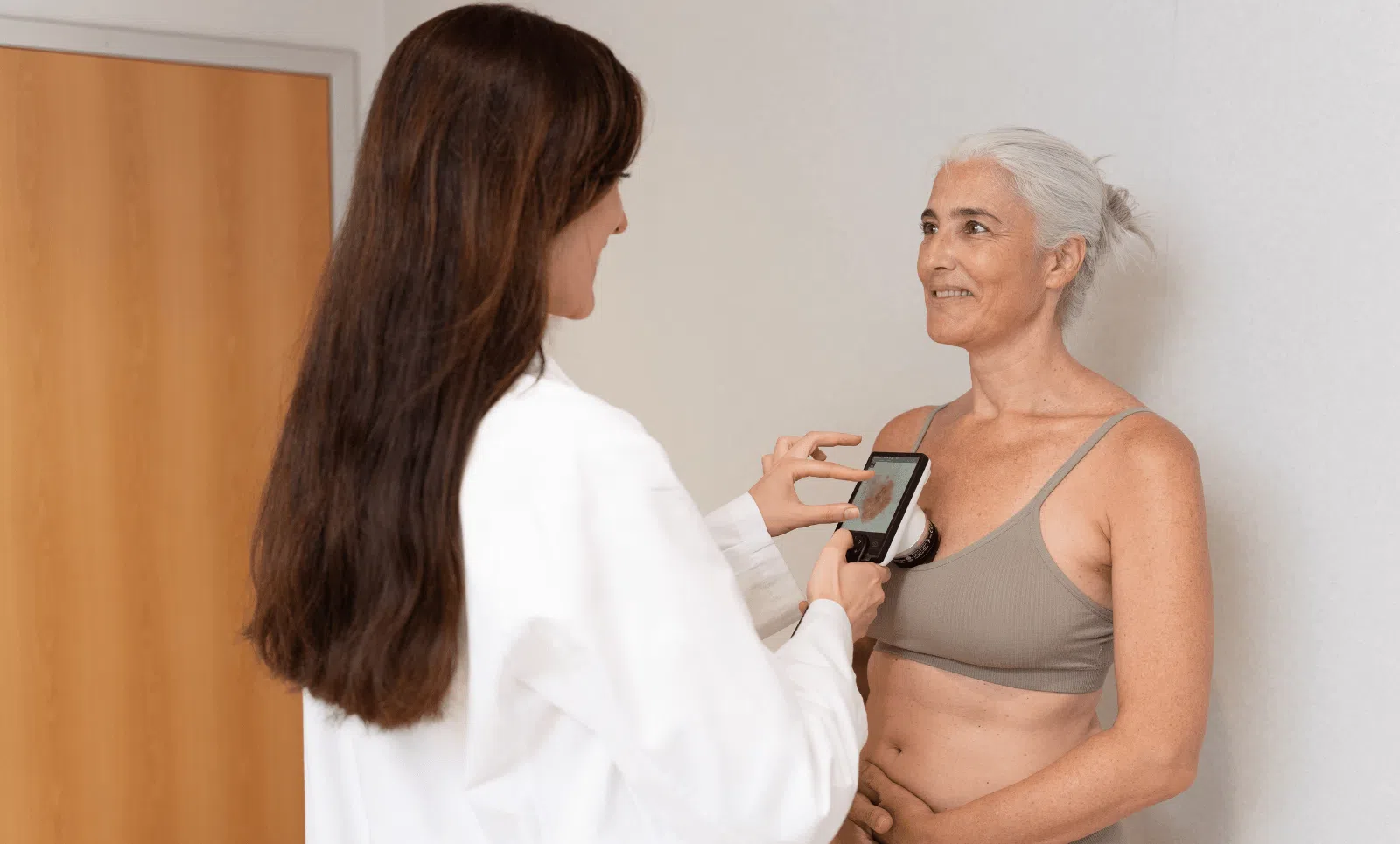
Before undergoing an aesthetic treatment, it is advisable to have a dermatologist examine the lesions and perform skin mapping. Once it has been confirmed that the lesions are benign and that their treatment is purely aesthetic, the most appropriate dermatological or medical-aesthetic procedure can be considered.
Intellistudio
At Clínica Planas, we have Intellistudio, a tool that allows us to map skin lesions on both the face and body.
This technology makes it possible to observe different skin conditions, focus the analysis on specific areas, and examine individual lesions. In this way, it facilitates a more personalised assessment and provides information for monitoring treated lesions.
This type of monitoring is particularly valuable for patients with a genetic predisposition or lifestyle-related factors that may contribute to the recurrence of certain pigmentation spots. It also allows specialists to evaluate how lesions evolve and monitor the skin’s response to treatment.
Intellistudio can therefore serve as a valuable supporting tool for both the initial assessment and the ongoing monitoring of treatment results.
How Much Does It Cost?
Your First Consultation Is Free.
At Clínica Planas, your first consultation is free of charge. A doctor will examine your pigmentation spots, rule out any suspicious lesions, and recommend the most appropriate treatment for this season, with no obligation.
