
Anti-aging diet
Eat just enough, burn more
“Eat like a king at breakfast, like a prince at lunch, and like a beggar at dinner, and have a snack in the mid-morning and mid-afternoon.”
This frugal diet is the one most commonly associated with healthy longevity. However, it’s not just about eating less; it’s about eating well. For this, the diet must be rich in essential nutrients and tailored to the needs of each person. There is no universal diet that works for everyone, as each person has specific needs and deficiencies that foods help balance. However, there are general guidelines that can help improve our eating habits.
It’s not only important to eat well and not skip any meals; it’s also essential to select the right foods and the correct quantities, as well as prepare them appropriately. Even though it can be scientifically proven that the only thing that can increase a person’s longevity is nutrition, people are eating worse and worse. In general, it’s not the deficiencies or lack of certain elements or vitamins that we find in patients, but rather overfeeding, meaning an excess of energy compared to what the person needs or expends.
Are we what we eat? Actually, we are what we absorb.
For effective nutrition, it is important that our intestinal system is functioning properly in terms of integrity, structure, immunity, and correct gut flora. It is also important to remember that we inherit a genetic code. These genes can be turned off or stimulated and expressed depending on the environment and lifestyle of each person (epigenetics). However, genes are not the only factor. A healthy diet, along with physical exercise, is essential in the journey toward healthier aging.
The distribution of meals is also something to consider. Breakfast is the most important meal of the day (an example of a good breakfast: whole grain bread with a tablespoon of natural tomato and olive oil, which we can season depending on the day’s meals, with oregano and a bit of high-quality protein. Why not a bit of Iberian ham or turkey?). For lunch, it should be substantial (a good option is to combine a very varied fresh vegetable salad, the trick is to have many colors, dressed with olive oil, with a main dish based on lean meat, fish, seafood, eggs, or legumes). Lastly, dinner should be light, but still appetizing (vegetables, dressed with a teaspoon of oil, some fruits, and yogurt).
We remind you to have a snack in the mid-morning and another in the mid-afternoon: fruit, yogurt, or natural juice.
In general terms, what would be the ideal diet to live longer?
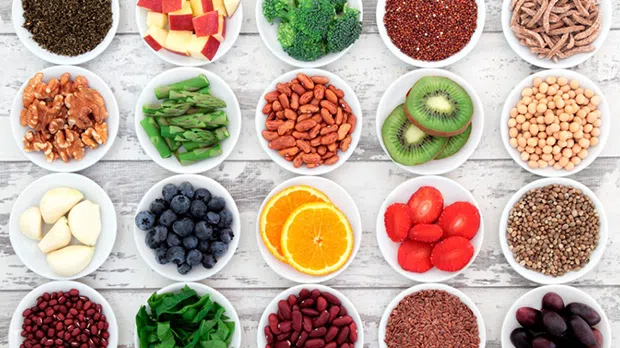
In principle, it’s about eating a large quantity of foods rich in fiber, vitamins, and minerals (fruit, salad, and vegetables), slow-absorbing carbohydrates (whole pasta, legumes), avoiding refined foods (white bread, sugar, non-whole cereals…), reducing red meat consumption, and increasing healthy fats rich in omega-3, such as nuts, avocado, salmon, and tuna. Quantities are also important; one must eat everything, but in the right proportions (for this, a basal metabolic rate study should be carried out, which we will discuss later). And, once again, always with an exercise base. But in the anti-aging diet, it is essential, above all, to follow a personalized nutrition plan: not everyone metabolizes the same or needs the same to feel good.
In the anti-aging program at Clínica Planas, various tests are conducted to determine if the person has a balanced nutritional state or is suffering from any degree of malnutrition. To do this, the medical and dietary history must be known, and their anthropometric and biochemical characteristics must be evaluated. Other important factors to consider include possible alterations in food intake, digestion, absorption, excretion, and metabolism. Thus, the anti-aging diet has general characteristics that must then be adapted to each patient. It should be low in calories, while ensuring all necessary macro/micronutrients and trace elements are present. With regard to fats, saturated fats should be minimized, and monounsaturated and polyunsaturated fats should be included in the diet in the proper proportions. If necessary, supplements can also be taken.
“Dietary supplements in the anti-aging diet are important. For example, if someone has an omega-3 deficiency, you can’t tell them to eat three kilos of sardines daily; or, for instance, if they have low iron, you wouldn’t recommend they eat four liver steaks. However, you can prescribe external sources of these elements.”
In any case, the recommended anti-aging diet is a healthy one where, if instead of giving vitamin compounds, juices can be prescribed, it’s even better. It is not an excessively restrictive diet. Ham and red wine are recommended, if there is no specific contraindication, because of the substances they contain, such as polyphenols and tannins, but especially because of resveratrol, one of the best-known antioxidants and anti-cancer agents. It stimulates sirtuins, a group of genes that regulate aging in all living organisms, although any type of alcoholic beverage should be minimized.
On the other hand, we also recommend chocolate, especially for women, as it is for them what aspirin is for men: a platelet anti-coagulant.
Food Matters
In any balanced diet, proteins, fats, carbohydrates, and fiber are essential. This is why it’s important to carefully select foods for an anti-aging diet. Proteins, made up of amino acids, allow for continuous renewal of our structures and the formation of necessary molecules. Our body does not store proteins, so we must distribute their consumption in at least three meals per day. Ham and fish are highly recommended in this case. Iberian ham, for example, can replace meat to provide protein to the diet. On the other hand, oily fish (at least three times a week), such as sardines or anchovies, are more advisable than meat. As for plant-based proteins, they should constitute 50% of the total protein intake. These are found in legumes, nuts, gluten, soy, tempeh, tofu, sprouts, etc.
Fats are also important, as they provide the highest source of energy and are therefore essential for the proper functioning of the body. Additionally, they not only aid in the absorption of some vitamins but are also enjoyable to the palate. However, special attention should be paid to saturated fats (their consumption should be less than 10% of the total fat intake), as they increase the risk of coronary diseases and raise cholesterol levels in the blood. Where can they be found? In fatty meats, cream, butter, coconut, pastries, industrial bakery products, etc. On the other hand, unsaturated fats (like olive oil, which is monounsaturated) reduce cholesterol levels in the blood, making them “good fats” necessary in the anti-aging diet. These fats also include polyunsaturated fats or essential fatty acids, particularly Omega-3 and Omega-6, which are found in vegetables, nuts, cereals, soy, walnuts, green leafy vegetables, and oily fish.
Lastly, carbohydrates (or sugars) provide energy to our body without generating too much waste, and it’s advised to consume them in fruits and vegetables, as complex carbohydrates with a low glycemic index. Fiber (half soluble/insoluble), a complex carbohydrate, helps to increase the food bolus.
Health in the anti-aging diet
But in general, the key is the frugal diet. “Our cells cannot consume all the glucose we ingest, so the body stores the excess energy in fat tissue, creating reserves. But our genetic code is programmed to survive better in times of food scarcity. The problem is that, in our society, we don’t use it, and we end up promoting obesity.”
In any case, to achieve optimal nutrition, a basal metabolic rate study should be conducted. With this technique, the specialist doctor can accurately determine the necessary calories for each person and their calorie distribution in terms of fats, proteins, and carbohydrates. The main reason for this is that we don’t all metabolize food in the same way. Some people burn sugars, fats, or proteins better. Therefore, if a patient who burns sugars poorly, for example, follows a weight loss diet in which they reduce fat intake but not sugar, the results will not be as expected.
Thanks to this study, we can determine the nutritional needs of a patient, understand which foods they burn better, and create a personalized diet that fits their needs. This test is a spirometry, meaning it analyzes the patient’s breathing using specific technology. The complete combustion of food occurs through oxygen molecules, so by analyzing the patient’s breathing, we can understand what is being burned more effectively and create a diet that meets their needs. In reality, when we lose weight, it’s lost through breathing, not through urine or sweat.
Dietary Supplements in the Anti-aging Diet
Since we cannot consume all the necessary vitamins, minerals, or beneficial substances for our health through food alone, supplements can help fill some gaps. Brands like Diafarm offer products aimed at combating aging and complementing the anti-aging diet. Their Vitaceutics Antiaging line comes in two formulas: Antioxidant, which helps to face the passage of time while maintaining a healthy appearance, and Beauty, designed to combat signs of aging reflected in the skin, hair, nails, and figure. The Antioxidant formula includes Oxxynea, an ingredient rich in polyphenols (flavonoids, procyanidins, anthocyanidins, etc.), glycine, vitamins, and minerals. Meanwhile, the Beauty formula contains green tea, borage oil, grapes, fish oil (rich in Omega-3), vitamins, minerals, and other ingredients.
