
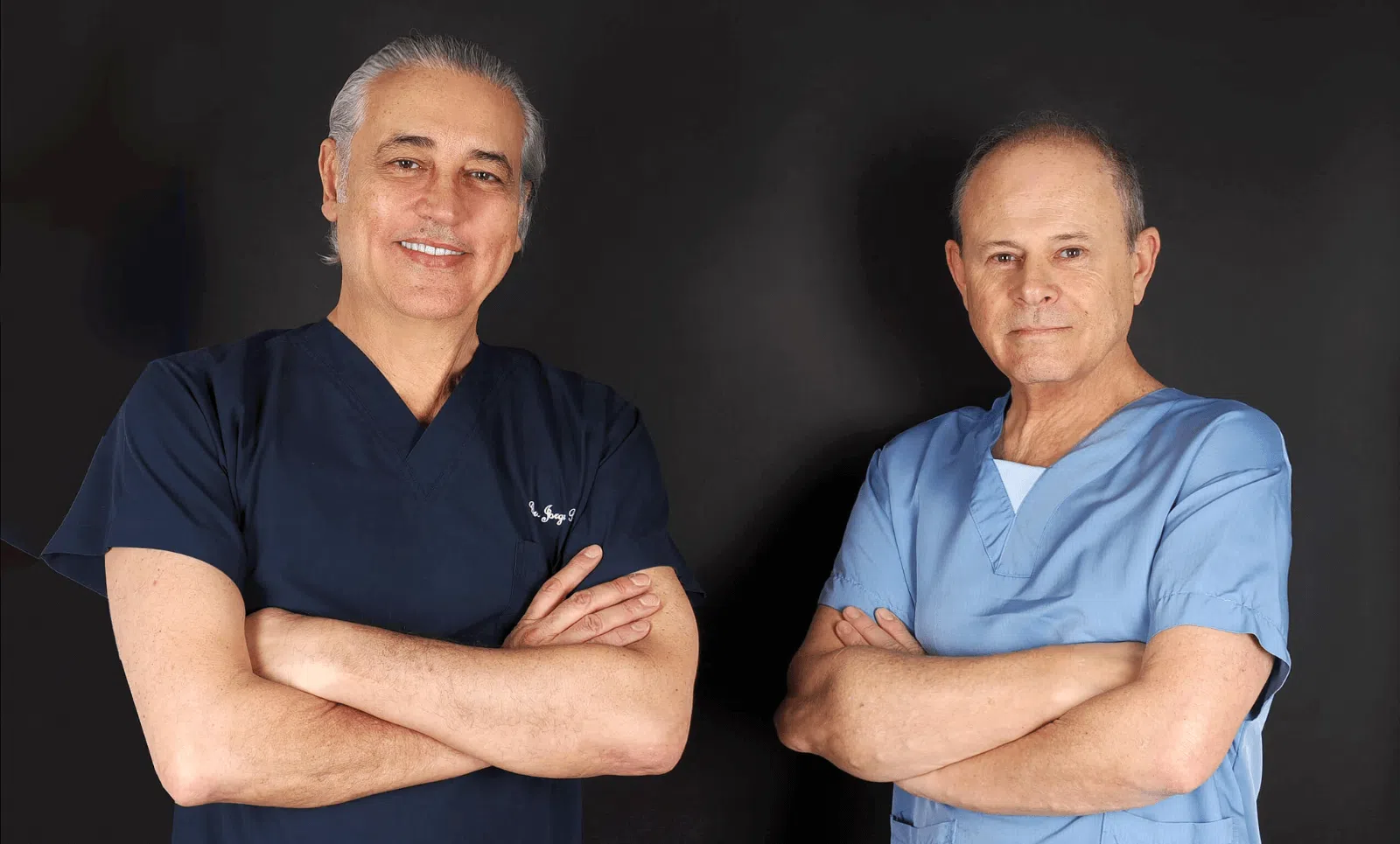
In this post, we share a new conversation between Dr. Jorge Planas, plastic surgeon and medical director of Clínica Planas, and Dr. Miguel Garber, expert in regenerative medicine.
With this series, we delve into the possibilities of this specialty, which has both therapeutic and aesthetic applications.
- JORGE PLANAS:
Today, we will talk about specific treatments in regenerative medicine, a field that is revolutionizing the way we approach various pathologies. These are innovative therapies that go far beyond treating symptoms: they aim to repair, restore, and regenerate damaged tissues.
How does treatment with cytokine-rich serum work? - MIGUEL GARBER:
Cytokine-rich serum represents an evolution in the use of autologous blood derivatives. Unlike plasma — such as the well-known PRP (platelet-rich plasma) — the serum is obtained after removing the clotting factors. That is, we start with the patient’s own blood, which we process in a specific way to obtain a concentrate of cytokines, which are key molecules in cell signaling. - JORGE PLANAS:
For those who are not familiar with the technical language, why is it important to remove the clotting factors? - MIGUEL GARBER:
Good question. Clotting factors, when present, activate healing mechanisms, which is useful in certain contexts. But when we want to promote true regeneration — for example:
- Neoangiogenesis (formation of new blood vessels)
- Recruitment of bioregenerative cells
- Or the modulation of inflammation
In these cases, we aim to avoid the fibrotic tissue that results from scarring. That’s why we eventually choose serum over plasma.
- JORGE PLANAS:
And how does this translate into concrete benefits for the patient? - MIGUEL GARBER: Cytokine-rich serum contains a high concentration of interleukins, growth factors such as TGF-β, IL-10, and anti-inflammatory proteins that act directly on the microenvironment of the damaged tissue. We use it in:
- Facial rejuvenation: Improves skin quality, increasing its density and radiance, and stimulates collagen production.
- Hair treatments: In cases of androgenetic alopecia or telogen effluvium, it improves blood circulation to the hair follicle and stimulates growth.
- Erectile dysfunction: By improving blood flow to the corpus cavernosum, especially in patients with vascular causes like diabetes, hypertension, or aging.
- JORGE PLANAS:
Can we go deeper into how regenerative medicine can help with erectile dysfunction? - MIGUEL GARBER:
Certainly. More than 70% of cases of erectile dysfunction have a vascular component. In these patients, if we manage to restore the endothelium and improve blood flow to the corpus cavernosum with regenerative cytokines, we can significantly improve erectile function. It is especially useful in older patients, those with type 2 diabetes, or those with a history of high blood pressure. - JORGE PLANAS:
We also work a lot with joint injuries — knee, hip, shoulder — how does regenerative medicine fit into this? - MIGUEL GARBER:
Very well. These therapies are highly effective in cases of chondropathies, meniscal injuries, tendinopathies, and early osteoarthritis. Instead of immediately resorting to surgery, we can inject cytokine-rich serum intra-articularly and achieve an anti-inflammatory and regenerative response, promoting cartilage recovery and reducing pain. - JORGE PLANAS:
And what about patients with disc herniation or chronic lumbar/cervical pain? - MIGUEL GARBER:
In cases of disc protrusion or lumbar pain without severe neurological compression, we can apply regenerative therapies epidurally or paravertebrally. These reduce neurogenic inflammation, improve microcirculation, and promote tissue repair. In many cases, we prevent the patient from needing surgery. - JORGE PLANAS:
Many patients see an osteopath once a week but still don’t achieve full recovery… - MIGUEL GARBER:
Exactly. Osteopathy is incredibly valuable for biomechanical and postural management, but if we combine these techniques with regenerative medicine, we enhance the effect and accelerate functional recovery. They don’t compete, they complement each other. - JORGE PLANAS:
We also use it for hair loss, right? - MIGUEL GARBER:
Yes, with excellent results. We can stop hair loss and improve hair density. Additionally, for post-transplant patients, we apply these therapies to promote faster follicle recovery and improve graft integration. - JORGE PLANAS:
And are the results long-lasting? Do they require maintenance? - MIGUEL GARBER:
It depends on each patient: age, lifestyle, genetics, associated pathologies… In general, we recommend 2-3 sessions per year. In some cases, one session a year is enough. The key is understanding that aging continues, and maintenance is part of the preventive approach. - JORGE PLANAS:
And can regenerative medicine improve sleep quality? - MIGUEL GARBER:
Indirectly, yes. For example, if a patient is not sleeping due to chronic pain and we resolve that pain, they will sleep better. But if insomnia is primary, we address it with specific therapies. The key is to study the cause of insomnia before intervening. - JORGE PLANAS:
But, in general terms, could we say that by improving overall health, we also improve sleep? - MIGUEL GARBER:
Absolutely. Regenerating is not just about repairing tissues; it’s about improving systemic functions. A body less inflamed, with more functional tissues, sleeps better, moves better, and ages more slowly.
